
How to Choose a CRM for a Scooter, Motorcycle, or Car Rental Business
From Launch to Scalable Growth
Starting a vehicle rental business — whether it's scooters, motorcycles, or cars — often looks simple at first. You buy vehicles, set prices, and start renting them out. But as soon as demand grows, many owners face the same problem: the business turns into daily operational chaos instead of a scalable system.
Double bookings, missed payments, manual scheduling, endless messages from customers — all of this quickly becomes routine work that blocks growth. The right CRM system can turn a rental business from a “manual operation” into a structured, growing company.
This article explains when a rental business needs a CRM, what to consider at each stage of growth, and how to choose the right system. We'll also compare popular solutions: Worco, Booqable, Odoo Rental, RentSyst, and Rentman.
When a Rental Business Really Needs a CRM
In the very early stage, many rental businesses manage operations with spreadsheets, WhatsApp, and handwritten notes. This can work temporarily, but clear warning signs appear quickly:
- vehicles are booked twice for the same time period;
- availability is checked manually;
- payments and deposits are tracked separately;
- customer history is lost;
- it's impossible to see real profitability or utilization rates.
If your rental business processes more than a few bookings per day, or if customers can book for different dates and durations, a CRM is no longer optional — it becomes infrastructure.
A CRM is especially critical if you:
- want to accept online bookings 24/7;
- manage multiple vehicles or locations;
- plan to grow your fleet;
- want predictable revenue instead of constant firefighting.
Business Stages and CRM Requirements
1. Launch Stage: Understanding Your Processes
At the beginning, the goal is clarity. You need to understand:
- how customers book;
- how availability is confirmed;
- how payments and deposits are handled;
- how vehicles are returned and checked.
At this stage, a CRM should help structure these flows, not overwhelm you with complexity.
2. Growth Stage: Automation and Speed
As bookings increase, automation becomes essential. A good rental CRM should:
- show real-time vehicle availability;
- automatically block booked vehicles;
- send booking confirmations and reminders;
- reduce manual communication.
This is the moment when spreadsheets start costing real money.
3. Scaling Stage: Control and Analytics
For a growing rental business, CRM becomes a management tool, not just an operational one. You need:
- utilization and revenue analytics;
- fleet performance data;
- clear insights into peak demand and downtime;
- the ability to add new vehicles or locations without breaking processes.
What to Look for in a CRM for Vehicle Rental
1. Vehicle Availability and Booking Logic
This is the core feature. The system must clearly show whether a scooter, motorcycle, or car is:
- available,
- booked,
- under maintenance,
- blocked.
Without this, double bookings are inevitable.
2. Online Booking and Payments
Modern customers expect to book online. A strong CRM should support:
- website booking forms or widgets;
- automatic confirmation;
- payment or deposit handling.
This reduces manual work and increases conversion.
3. Calendar-Based Management
A rental business lives in calendars, not pipelines. Visual scheduling with drag-and-drop bookings is far more effective than classic sales funnels.
4. Mobile Access
Staff often work on location. A CRM with a mobile interface or PWA allows instant access to bookings, customer details, and vehicle status.
5. Automation and Notifications
Automated reminders for:
- booking start and end times,
- late returns,
- payment status
help prevent losses and improve customer experience.
6. Analytics and Reporting
Without data, growth is guesswork. A CRM should show:
- revenue per vehicle;
- utilization rate;
- booking trends;
- operational bottlenecks.
CRM Comparison for Rental Businesses
Worco
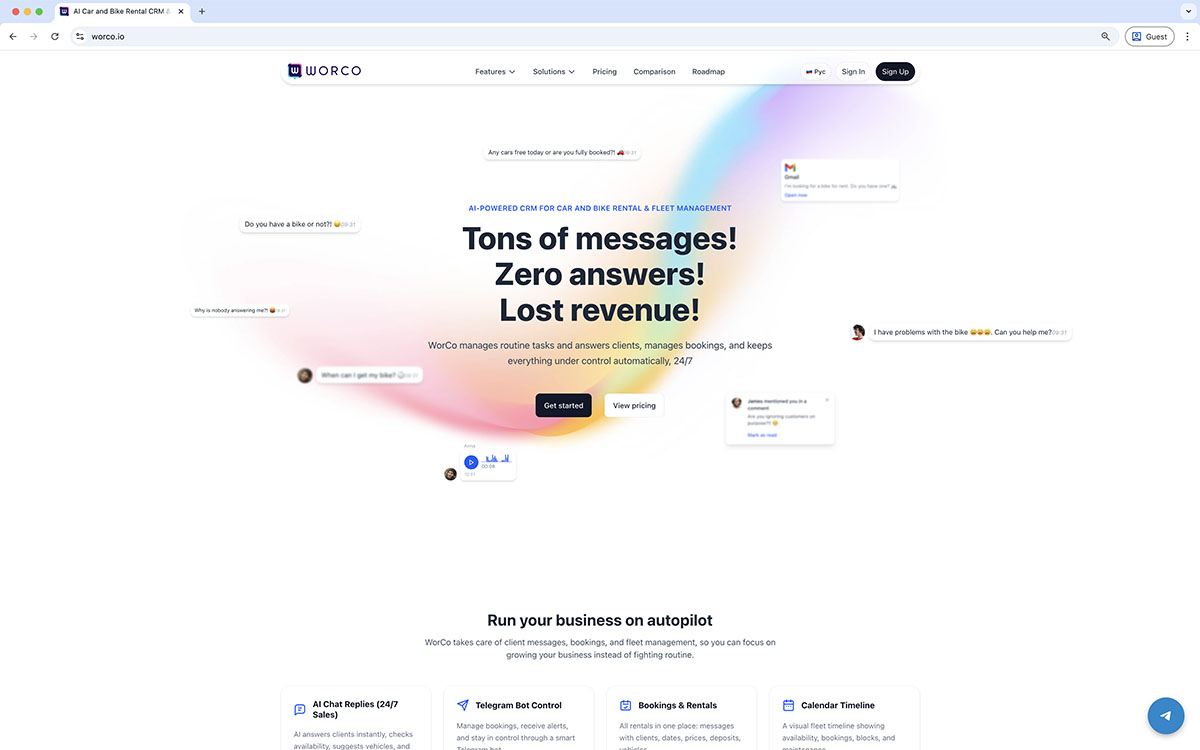
Worco is designed around rental and booking-based businesses, with a strong focus on calendars, availability, and operational simplicity. Instead of adapting a sales CRM, Worco is built to match real rental workflows.
Strengths
- calendar-driven booking logic;
- vehicle availability tracking;
- customer and order management in one system;
- suitable for scooter, motorcycle, and car rentals.
Best for: Rental businesses that want to move from manual processes to structured growth without heavy customization.
Booqable
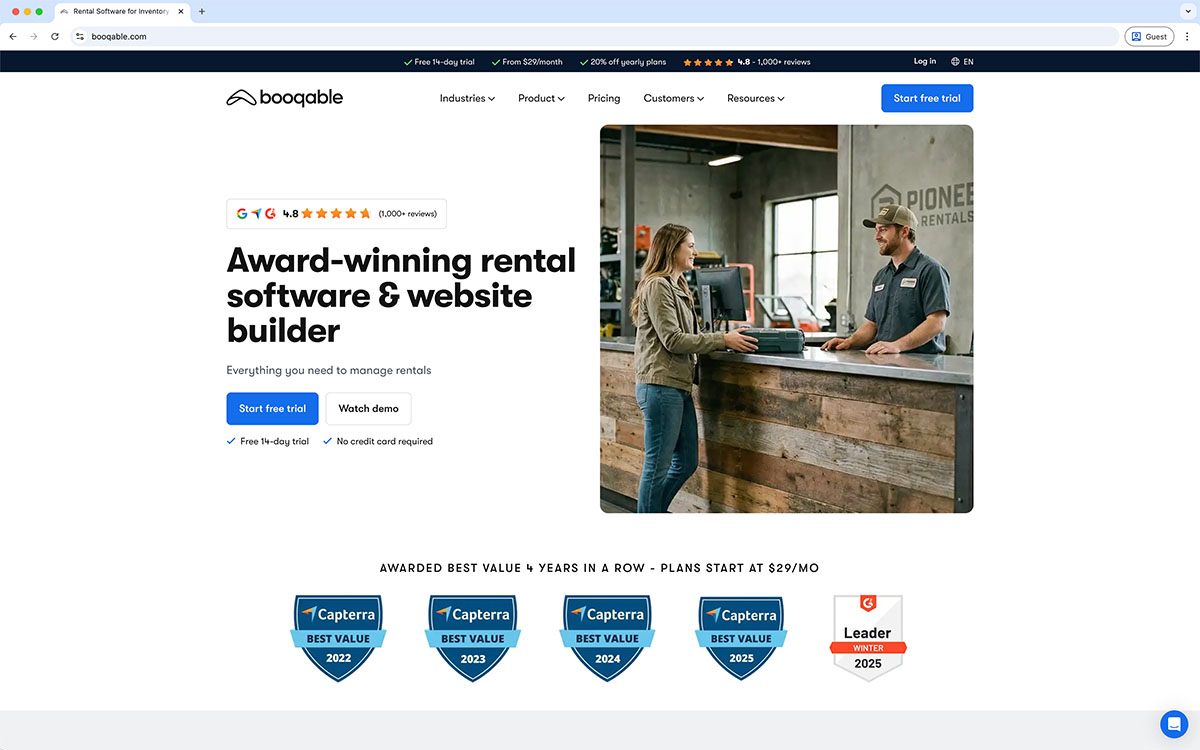
Booqable is a popular rental platform used for equipment, vehicles, and inventory-based rentals.
Strengths
- excellent online booking experience;
- inventory and availability management;
- website integration and payment support;
- clean and intuitive interface.
Limitations
- pricing may be higher as the business grows;
- less focus on internal CRM workflows compared to specialized tools.
Best for: Small to medium rental businesses that prioritize online bookings and ease of use.
Odoo Rental
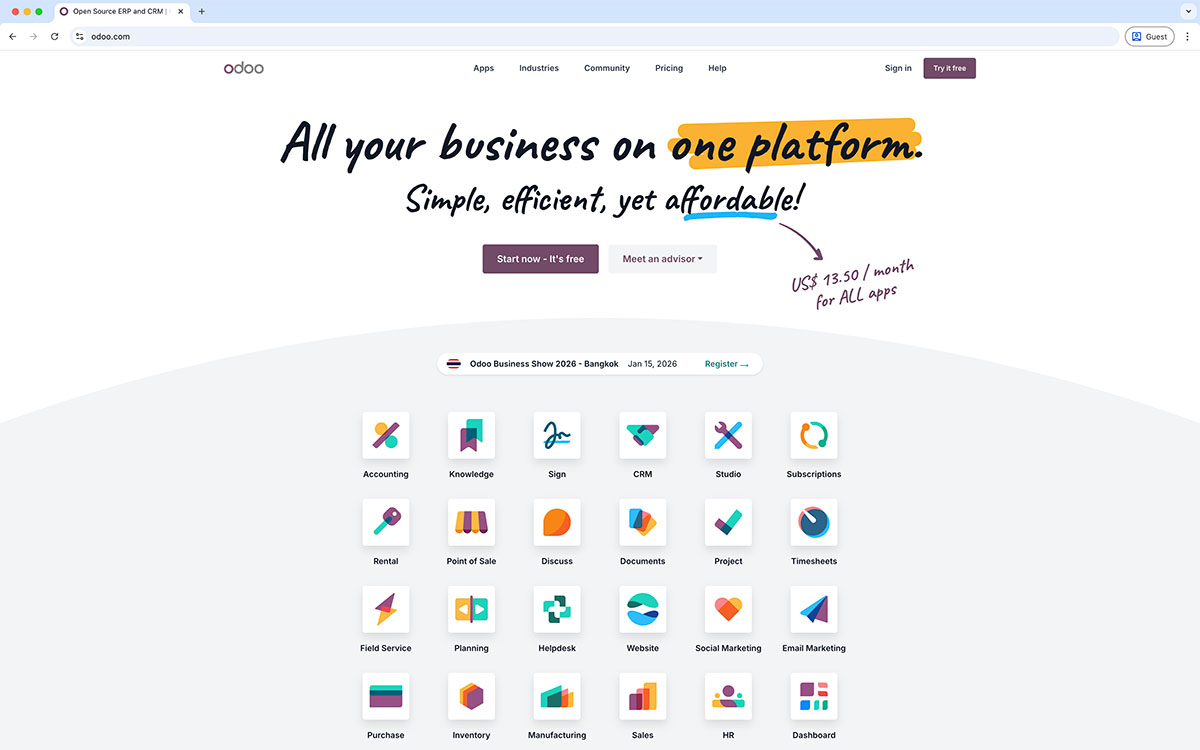
Odoo Rental is part of the broader Odoo ERP ecosystem.
Strengths
- powerful and flexible;
- integrates CRM, accounting, website, and inventory;
- suitable for complex business models.
Limitations
- requires setup and configuration;
- can be too complex for small rental businesses;
- longer implementation time.
Best for: Companies planning large-scale operations with complex internal processes.
RentSyst
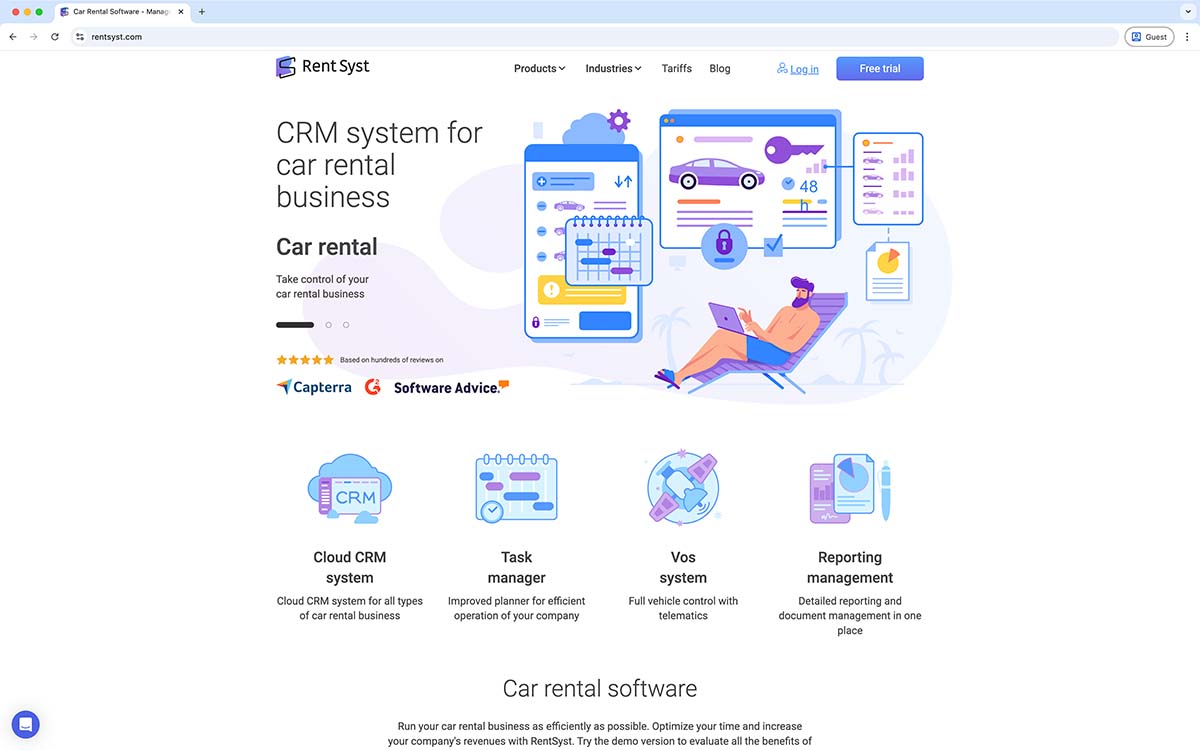
RentSyst is a rental-focused solution with built-in booking and fleet management tools.
Strengths
- designed specifically for vehicle rentals;
- online booking and availability control;
- straightforward setup.
Limitations
- fewer customization and integration options;
- less flexible for non-standard workflows.
Best for: Car rental businesses that want a ready-to-use solution with minimal setup.
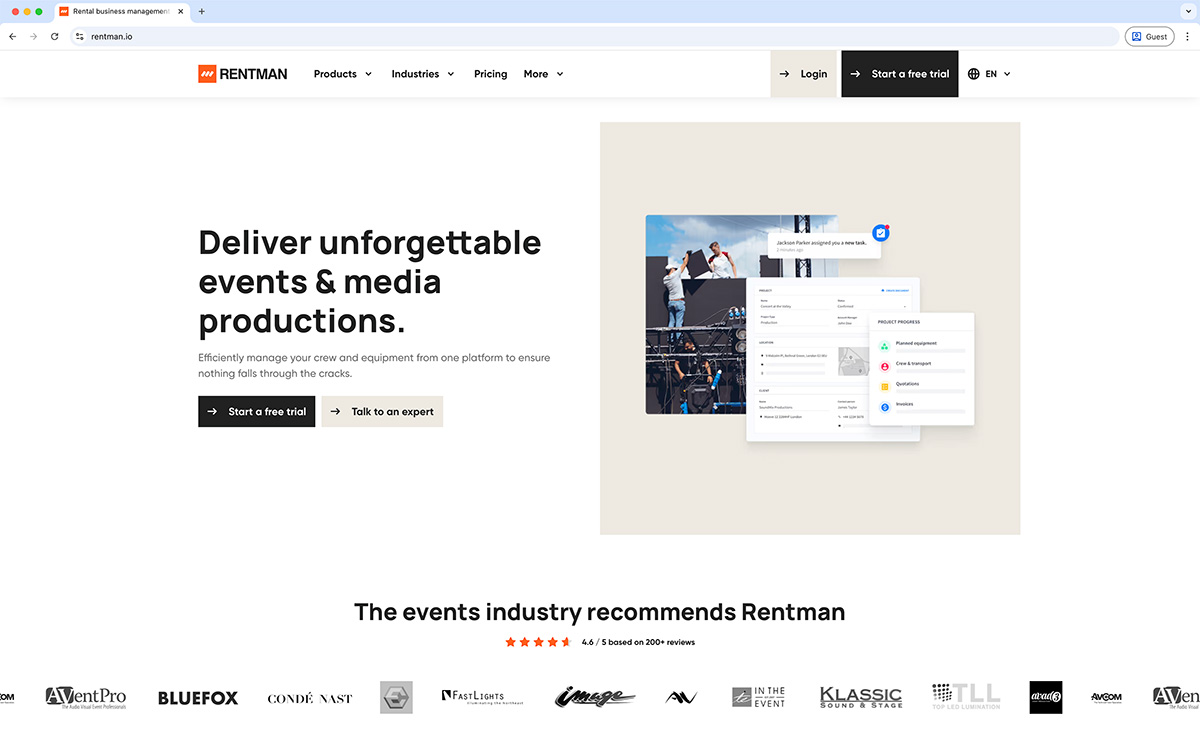
Rentman
Rentman is widely used in equipment and event rentals and can be adapted for vehicles.
Strengths
- strong resource planning;
- detailed reporting;
- scalable for large operations.
Limitations
- not vehicle-rental-first by design;
- higher complexity for small teams.
Best for: Large rental operations with complex logistics and planning needs.
How to Make the Right Decision
Before choosing a CRM:
- Map your real booking and return process.
- Define must-have features (availability, calendar, payments).
- Test 2–3 systems with real scenarios.
- Check how easy it is for staff to use daily.
- Evaluate long-term scalability, not just initial price.
Final Thoughts: CRM as a Growth Engine
A CRM should not add bureaucracy. It should remove routine, prevent mistakes, and give you visibility into your business.
For scooter, motorcycle, and car rental companies, the right CRM transforms daily operations into a scalable system. Instead of managing chaos, you manage growth — with clear data, automated processes, and satisfied customers.
Choosing the right tool early saves time, money, and stress — and allows your rental business to grow intentionally, not accidentally.